

Censuses help us track more than just human populations – they can also be used for plants! Plus, that data can help inform conservation efforts for rare species and species at risk. However, unlike humans, plants cannot fill out a form. Instead, personal visits to each individual plant are needed.
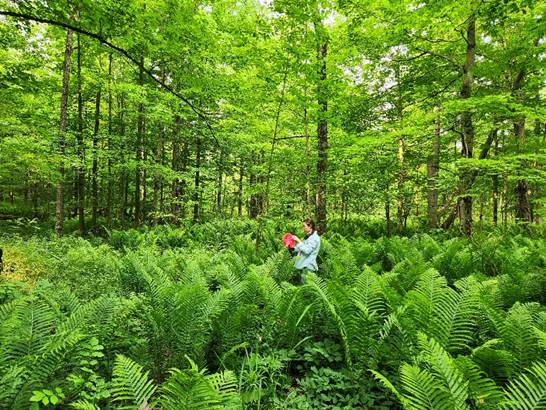
Photo caption: Dr. Amy Wiedenfeld marking out individual wood poppy plants among the ferns in a Southern Ontario forest.
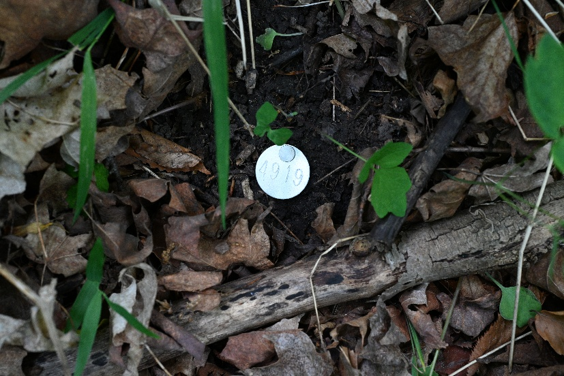
Photo caption: A newly tagged wood poppy seedling. Amy tagged individual plants so they could be re-visited each year of her research.
Enter Dr. Amy Wiedenfeld, student at the University of Lethbridge. Over the last five years, Dr. Wiedenfeld visited populations of three different species of rare plants in Southern Ontario. This included the wood-poppy, goldenseal, and spotted wintergreen.
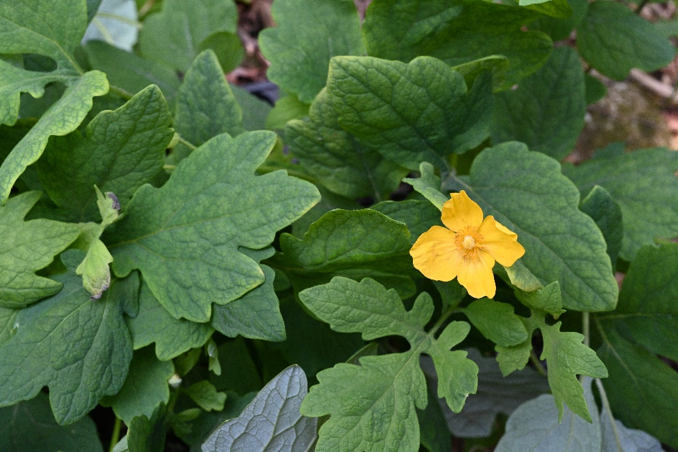
Photo caption: One of the focal species of Dr. Wiedenfeld’s research, the wood-poppy (Stylophorum diphyllum), which is listed as Endangered under both the federal Species at Risk Act (SARA) and Ontario’s Endangered Species Act (ESA).
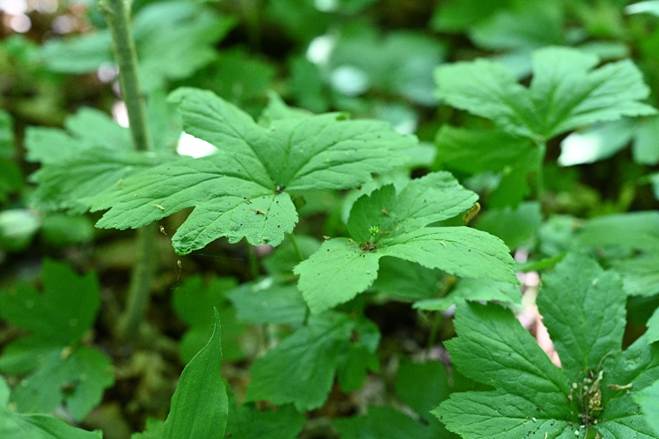
Photo caption: Another species that Dr. Wiedenfeld worked with was goldenseal (Hydrastis canadensis). Goldenseal is listed as Threatened under the federal SARA and Special Concern under Ontario’s ESA.
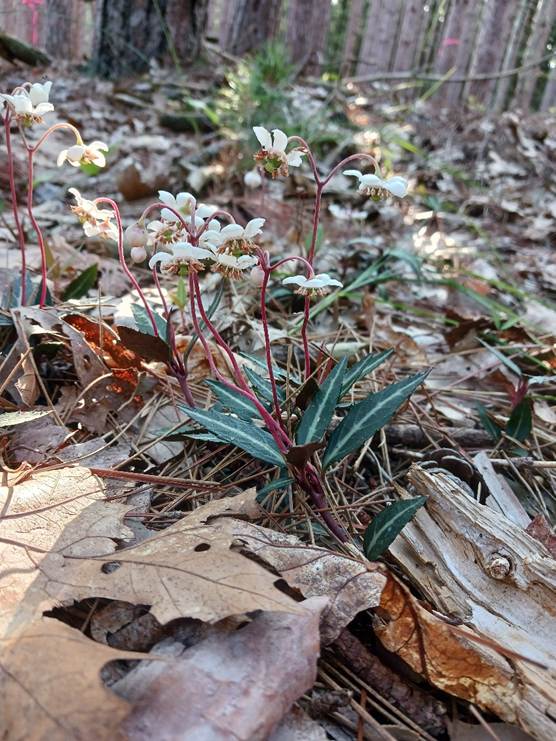
Photo caption: The third focal species of Dr. Wiedenfeld’s research was spotted wintergreen (Chimaphila maculata). This species is listed as Endangered under the federal SARA and Threatened under Ontario’s ESA. Photo credit: Amy Wiedenfeld.
During her visits, Dr. Wiedenfeld collected census and environmental data that she used to build population models, helping her better understand how populations of at-risk plants change over time.
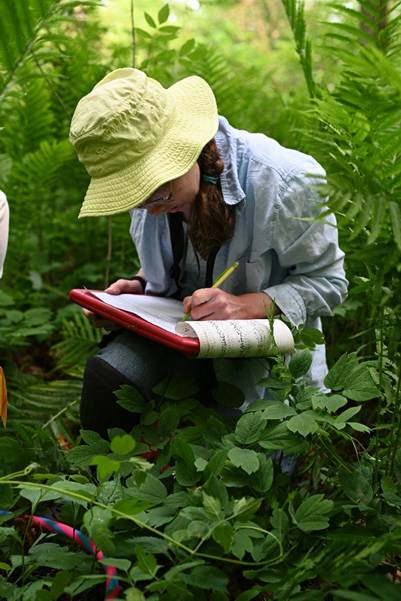
Photo caption: Dr. Wiedenfeld collecting data at a wood-poppy population.
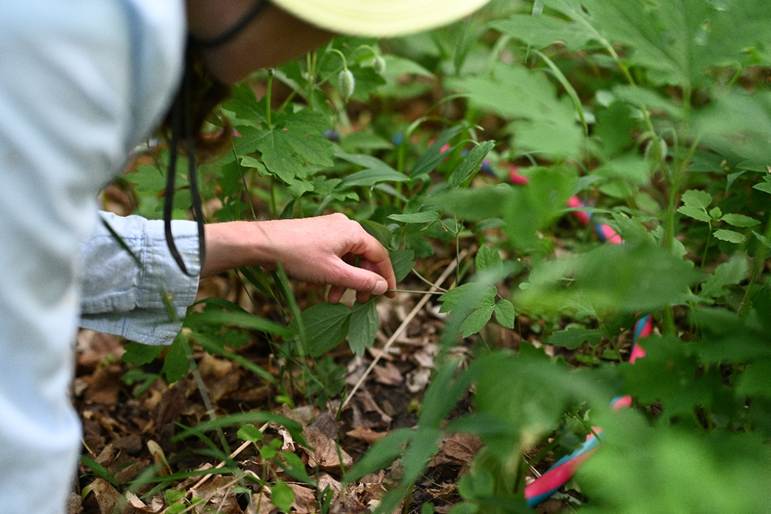
Photo caption: Dr. Wiedenfeld using a hula hoop to delineate a study plot to measure plant density and documenting the plant community.
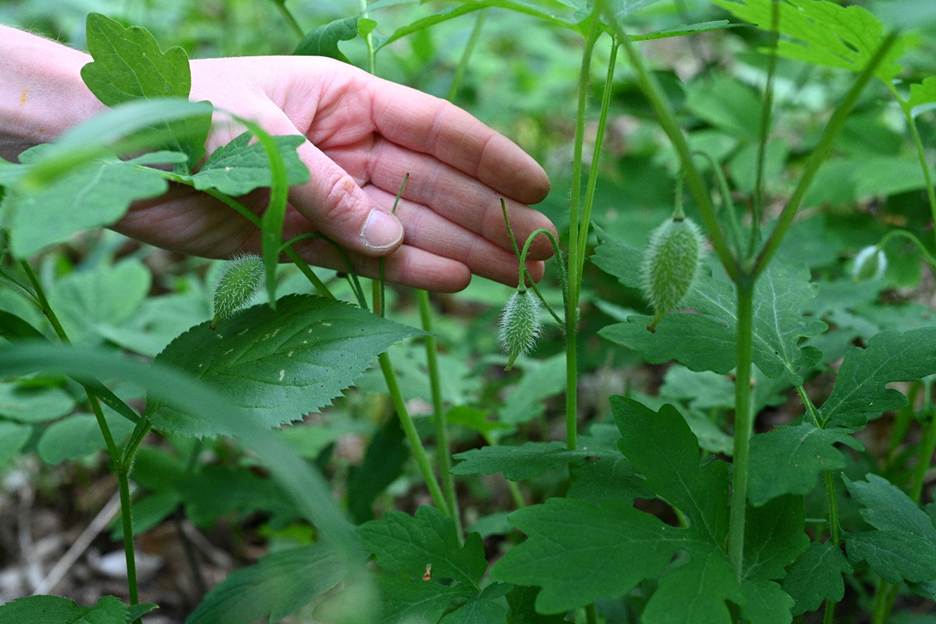
Photo caption: As part of her research on wood-poppy, Dr. Wiedenfeld collected demographic data such as how many fruits and flowers plants had, size and survival. She then used population models to look at population growth rates and help determine which life stage contributes most to that growth rate.
Using population models, Dr. Wiedenfeld’s research explored three key questions:
- Which life stages contribute most to population change?
- How well do population models predict future population sizes?
- how do environmental conditions influence population change?
In addition to finding that seedling survival is critical for wood-poppy populations, her work also showed that models tended to underestimate future goldenseal populations and that environmental factors operating across multiple scales can influence the population dynamics of both goldenseal and spotted wintergreen.
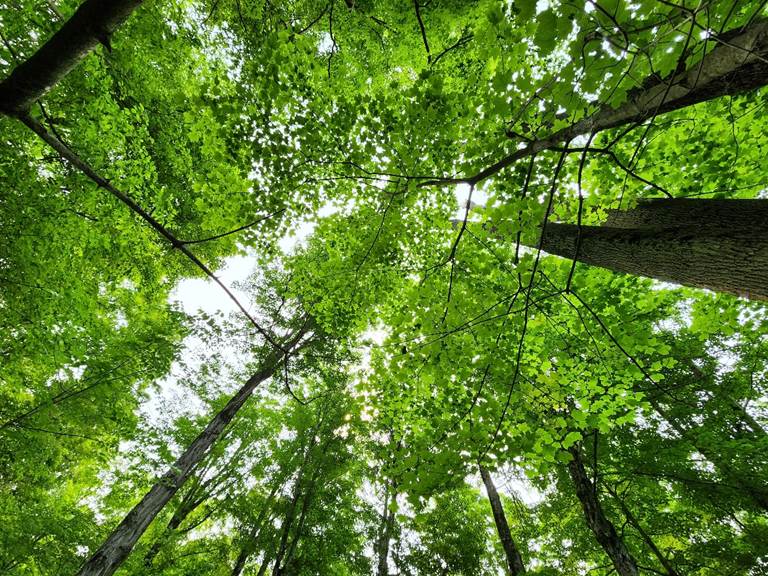
Photo caption: One aspect of Amy’s research was looking at how environmental drivers such as canopy cover might influence population change.
We are thrilled to congratulate Dr. Wiedenfeld for successfully defending her PhD thesis last week and wish her continued success wherever her career takes her. Since there aren’t many population monitoring studies on rare plants in Canada, her findings give valuable insights into how population models can help us understand changes in plant populations over time.
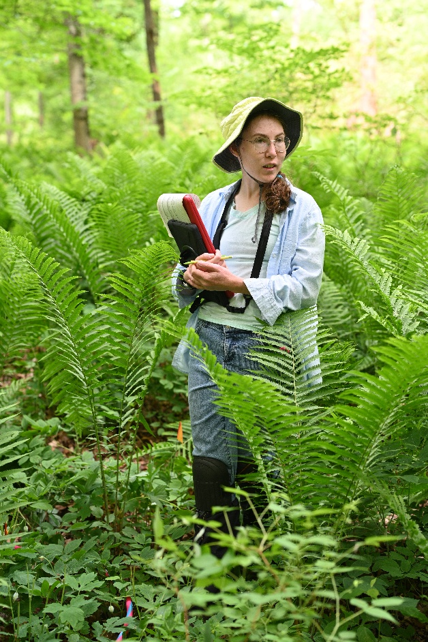
Photo caption: Dr. Wiedenfeld at one of her study sites in Southern Ontario.
We are proud to have supported Amy’s research through the Ontario Rare Plants Program, which is in partnership with the University of Lethbridge, the University of Guelph, the Nature Conservancy of Canada, and Kayanase.