

The burrowing owl is a small, ground-dwelling bird native to Canada’s prairie grasslands. Unlike most owls, they nest underground in burrows dug by other species, making burrowing owls closely tied to the health of prairie ecosystems.
The burrowing owl is listed as Endangered in Canada under the Species at Risk Act. Populations declined by approximately 90% from the 1980s into the early 2000s and have not recovered, it’s estimated that there are as few as 270 to 300 breeding owls in Canada.
Burrowing owls live in open, dry grasslands with low vegetation. They rely on burrows created by mammals like badgers, ground squirrels, swift foxes, coyotes, and prairie dogs. They require grazed landscape to maintain the short grass they need for nesting and hunting.
For thousands of years, burrowing owls have been a part of grassland ecosystems in southern Alberta and Saskatchewan. They migrate each year to Mexico and the southern United States, although not all return in the spring to Canadian prairies.
Habitat loss, low survival rates, and migration-related mortality.
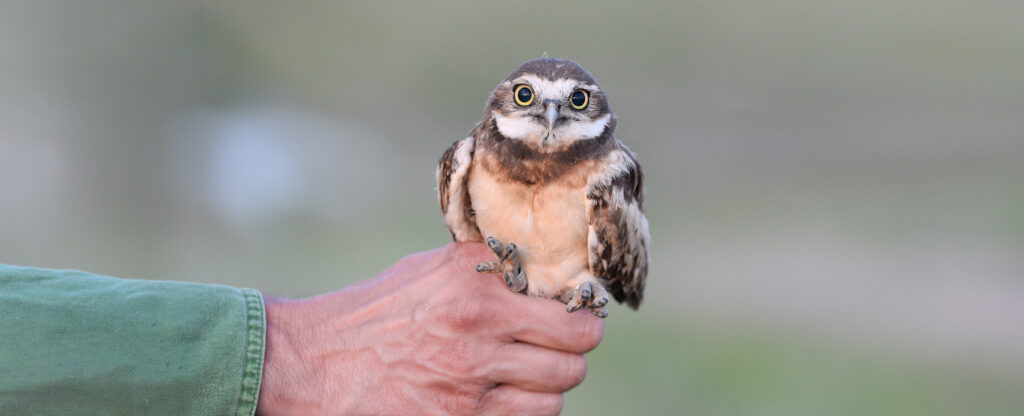
Burrowing owls are uniquely adapted to life on the ground, relying on other prairie species to survive.
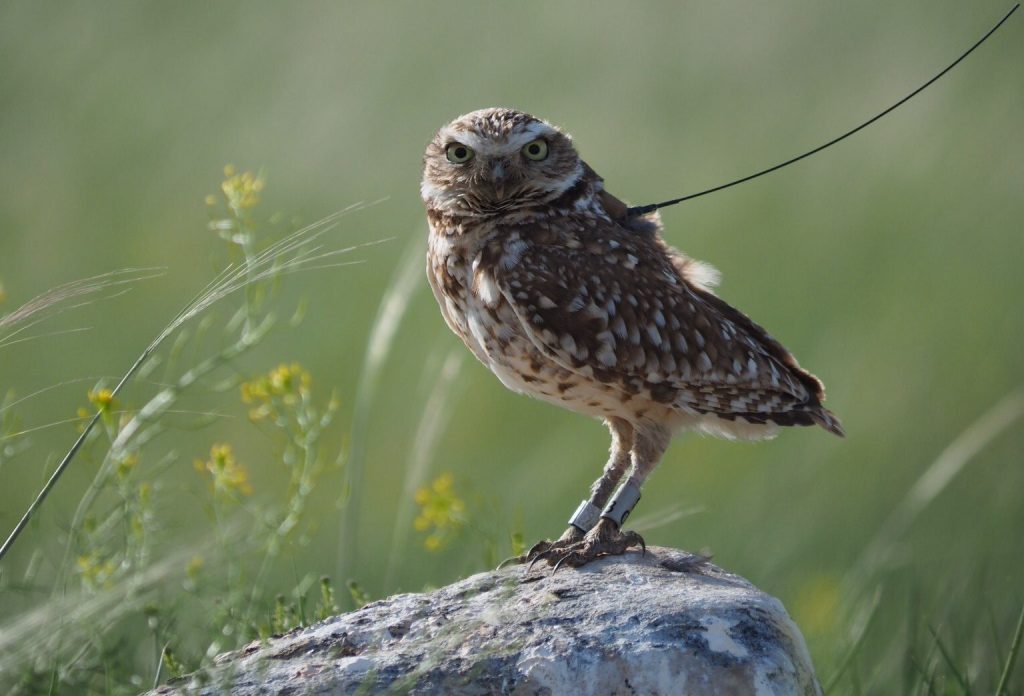
The burrowing owl is a small, long-legged owl that nests underground rather than in trees. They’re active both during the day and at night, hunting insects and small animals that live in the prairies.
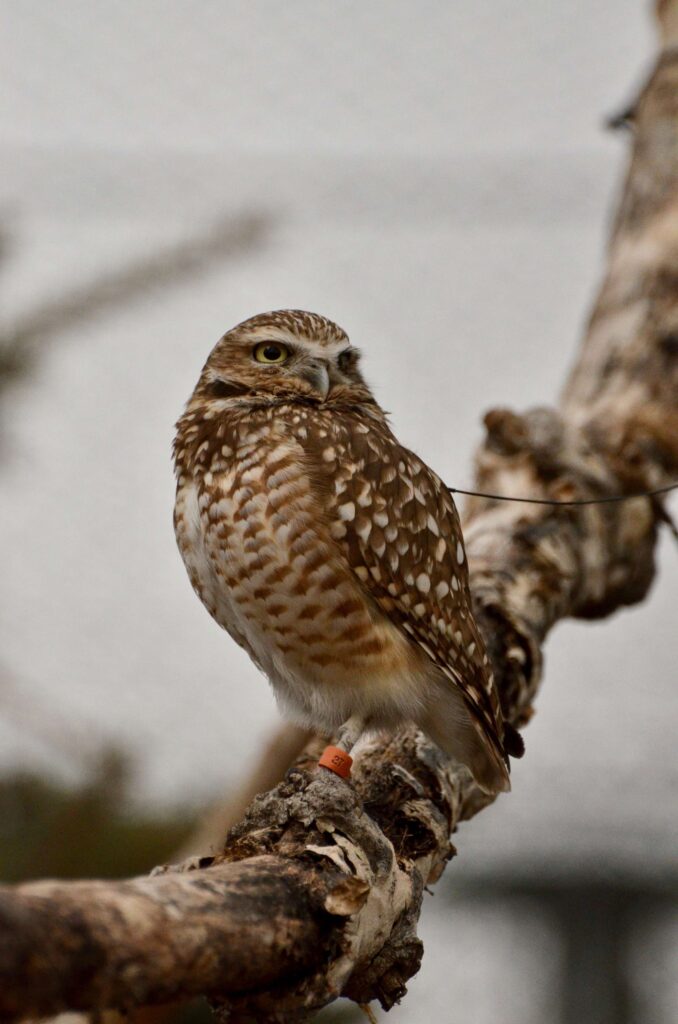
In Canada, burrowing owls live in native prairie grasslands, particularly in southern Alberta and Saskatchewan. They depend on open terrain and burrows dug by other species. Much of their remaining grassland habitat exists in rangelands.
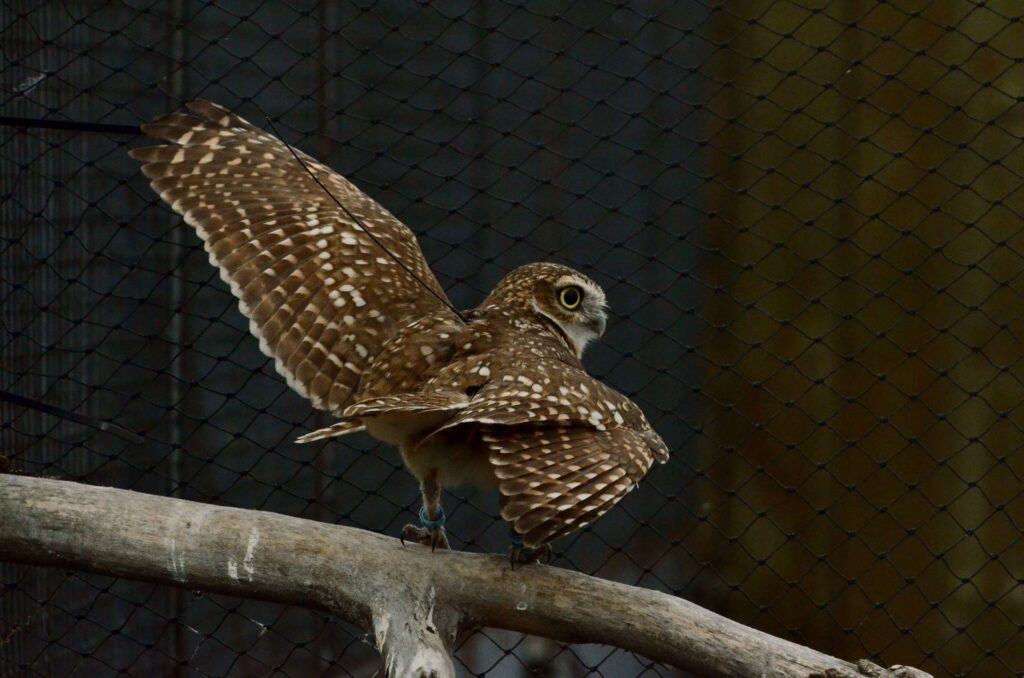
Burrowing owls have long legs for running and hunting on the ground. They’re highly mobile, using burrows from other animals for nesting and protection. Their ability to hiss like a rattlesnake helps deter predators from entering their nests.
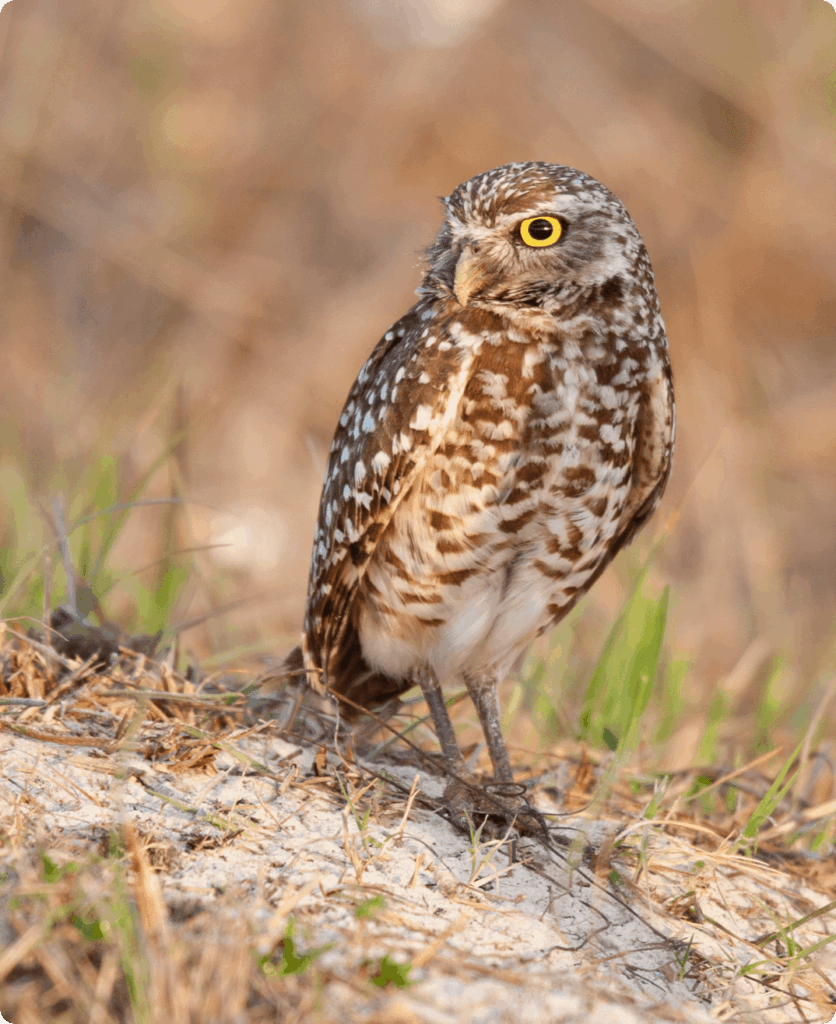
Unlike most owls, burrowing owls are active during the day and nest underground. They’re a unique example of the interconnected nature of prairie life, as they rely on other species for burrows.
Burrowing owls play an important role in grassland ecosystems, signaling the health of prairie environments. Their presence reflects strong populations of other burrowing species and intact habitats. Losing them would mean further decline of one of Canada’s most threatened ecosystems and a loss of the heritage tied to the prairies.
Burrowing owls face multiple compounding threats. Habitat loss from converting prairies to agricultural lands has reduced their available nesting areas. Fewer burrowing mammals – that the owls depend on – means fewer nesting sites. Their migration south presents unknown risks, as many owls don’t return to Canada in the spring. Declining food sources and low survival rates of young owlets further limit their population recovery.
The Wilder Institute is working to help burrowing owls in Alberta using a conservation technique called head-starting. At the Wilder Institute’s Archibald Biodiversity Centre, we care for young owls through their most vulnerable stage, then release them back into the wild to breed, strengthening population recovery.
Head-starting supports young owls through early life stages, increasing their survival and helping more individual owls reach breeding age in the wild.
Burrowing owls are released as breeding pairs into suitable habitats, supporting population growth and strengthening prairie ecosystems over time.
Much of the remaining burrowing owl habitat exists on working ranches, where cattle grazing maintains the open grasslands they need to survive. By partnering with ranchers, we support habitat conservation and release owls on actively managed lands that support their long-term recovery.
Partnerships with landowners, governments, and conservation groups support burrowing owl recovery and strengthen the shared stewardship of prairie ecosystems.
Supporting species recovery through collaborative, science-based conservation action.
Head-starting is a conservation strategy that temporarily raises the most vulnerable owlets – those who hatched last, the smallest chicks, or those most likely to starve before fledging – through their first winter at the Wilder Institute’s Archibald Biodiversity Centre. Come spring, these owls are released as adults in breeding pairs, supported with supplemental food at their burrows and monitored throughout the nesting season.
The program operates across southeastern Alberta’s native prairie grasslands, a landscape recognized for its high concentrations of species at risk. Owls spend the winter and are cared for at the Wilder Institute’s Archibald Biodiversity Centre, a 330-acre conservation facility that opened in 2022. Releases take place exclusively on active cattle ranches, where sustainable grazing maintains the short-grass habitat burrowing owls require.
~100%
Nearly 100% survival rate for head-started owls before release
171
171 burrowing owls released since 2016
>300
Over 300 owlets born in the wild by released birds
~80%
~80% of release pairs successfully nest in their first season
Burrowing owls live across North American grasslands, from Canada to Mexico.
Help protect prairie ecosystems and support species recovery.
Support Wilder’s conservation programs that protect burrowing owls and restore prairie habitats.
Join a community working to protect wildlife and strengthen ecosystems for future generations.
Explore monthly giving or fundraising opportunities to support long-term conservation efforts.